Furnace Diagnostics and Repair Before Breakdowns
Gas heating and furnace service in Johnsburg for systems showing reduced performance or reliability concerns
Northern Illinois winters demand reliable heating equipment, since furnace failure during sub-zero temperatures creates immediate safety and comfort emergencies. Routine service catches developing problems before they cause complete shutdowns—ignition components wear and fail to light burners reliably, heat exchangers develop cracks that allow combustion gases to mix with circulating air, and blower motors struggle with accumulated dirt and worn bearings until they seize. TCS Mechanical provides gas furnace service and heating repair in Johnsburg, Illinois for equipment showing warning signs like uneven heating between rooms, unusual odors during operation, increasing utility costs despite stable usage, or difficulty maintaining set temperatures during cold weather. Early intervention typically involves cleaning and adjustment rather than major component replacement, extending system life and preventing mid-winter failures.
Service includes inspection of heat exchanger integrity, burner flame characteristics, venting system condition, and safety control function. Gas pressure gets measured at the manifold and compared to specifications, since incorrect pressure causes inefficient combustion and premature component failure. The blower assembly gets cleaned and inspected for motor bearing wear, capacitor degradation, and belt condition on older systems. Filter condition affects everything downstream—restricted airflow from clogged filters causes overheating, frequent cycling, and reduced heat delivery to living spaces.
Schedule pre-season service in early fall to address issues before heating demand peaks.
What Furnace Maintenance Actually Prevents
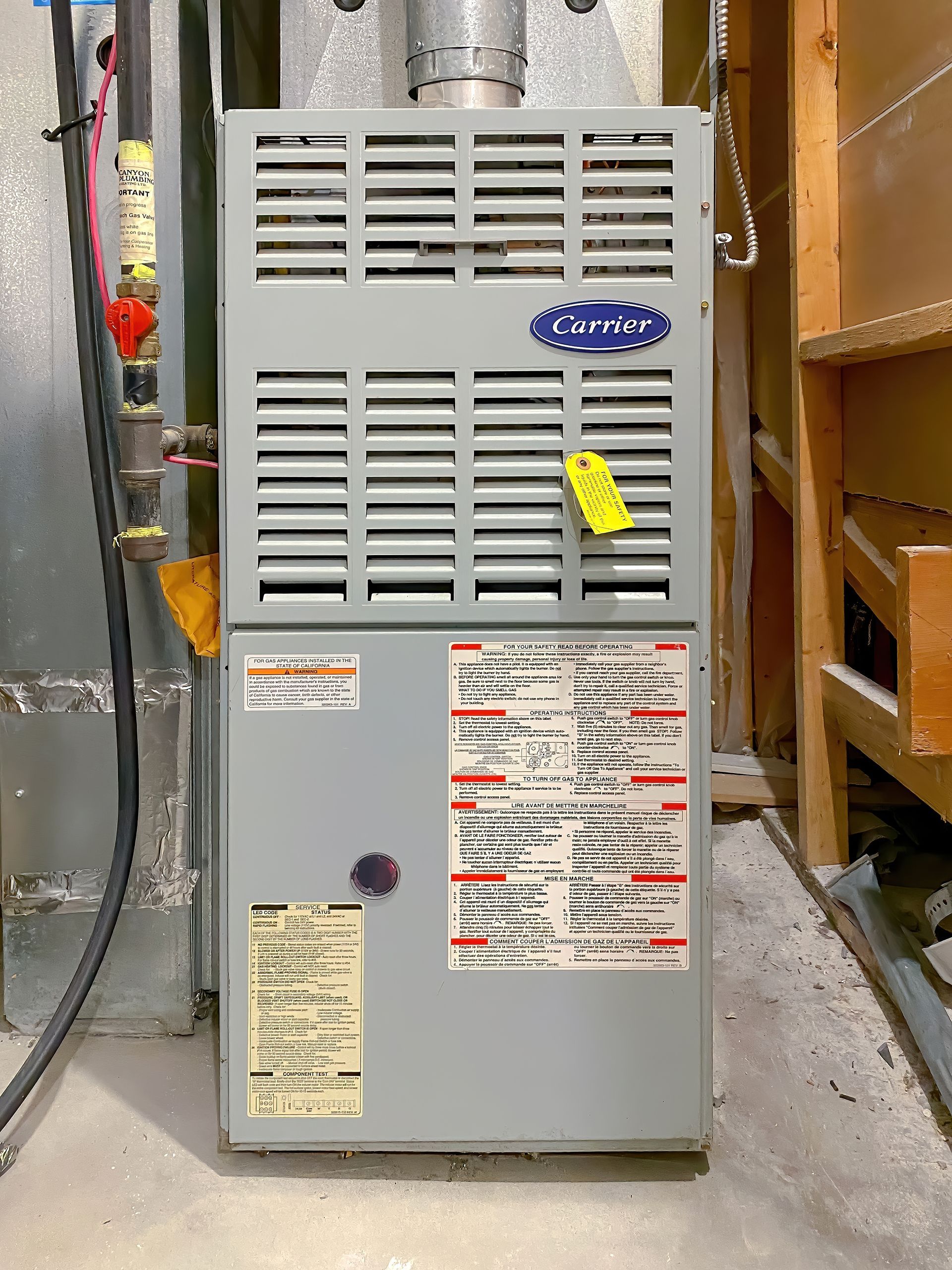
Combustion analysis measures flue gas composition and temperature to verify complete burning and proper venting—incomplete combustion wastes gas and produces carbon monoxide that must be safely vented outdoors. Flame sensor cleaning addresses the most common no-heat complaint, since mineral buildup on the sensor prevents flame detection even when burners light properly. Limit switches and rollout sensors get tested to confirm they'll shut the system down if overheating or improper venting occurs.
After service finishes, the furnace reaches set temperature efficiently without extended runtimes or short cycling, and burners ignite reliably on the first call for heat rather than requiring multiple attempts. Temperature distribution evens out across rooms as restored airflow delivers heat properly throughout the duct system. Operating sounds normalize—rattling, scraping, or squealing noises that developed gradually disappear once components are cleaned and adjusted. Gas consumption decreases to expected levels as combustion efficiency improves and the system stops compensating for restricted airflow or burner problems with extended runtime.
Repair work addresses specific failures identified during diagnostic testing—igniter replacement when resistance measurements fall outside specification, pressure switch replacement when the component fails to close and allow ignition sequence to proceed, or inducer motor replacement when bearings wear and prevent proper pre-purge and venting. Service does not include ductwork modifications, thermostat replacement unless the existing control is malfunctioning, or heat exchanger replacement in furnaces where the cost approaches new equipment pricing. Systems older than fifteen to eighteen years with major component failures often make better candidates for replacement than repair.
Questions Before Starting Your Project
Understanding what furnace service involves and when repairs make sense helps you maintain heating reliability and budget appropriately for equipment needs.
What gets checked during a complete furnace inspection?
Service includes heat exchanger examination with flashlight and mirror for cracks or corrosion, combustion analysis to measure efficiency and verify complete burning, safety control testing to confirm proper shutdown under fault conditions, and blower cleaning with motor and capacitor inspection.
How do you determine whether repair or replacement makes sense?
Equipment age, repair cost as a percentage of replacement cost, and overall system condition guide the decision—furnaces approaching twenty years with major component failures typically warrant replacement rather than continued repair investment.
When should I schedule annual maintenance for heating equipment?
Late September through October allows service completion before heating demand begins and while technician availability is better than during winter emergency periods in Johnsburg and surrounding areas.
Why do some furnaces require multiple service calls each season?
Deferred maintenance creates cascading problems where initial failures stress other components, inadequate airflow from dirty blowers causes overheating that damages limit switches and heat exchangers, and aging equipment simply reaches the point where multiple systems deteriorate simultaneously.
What indicates a heat exchanger crack that requires immediate attention?
Visual cracks or holes observed during inspection, sooting patterns that indicate flame impingement, elevated carbon monoxide readings in combustion analysis, or corrosion damage that's penetrated the metal all indicate heat exchanger failure requiring immediate shutdown and replacement.
TCS Mechanical provides furnace service and heating repair throughout Johnsburg for homeowners maintaining existing equipment and addressing performance concerns before they escalate. Call us to schedule seasonal maintenance or to diagnose heating problems affecting comfort and system reliability.